
Like many people in this city, I first met Julian Maya when he was working behind the bar at St. Pete Brewing Company, a semi-regular in search of a beer who had no idea just how talented and dedicated to his craft he was.
Over the years, I got to know Julian a bit better. I knew he was a DJ, but not to what extent. I knew he was organized and industrious enough to eventually become the manager of The Nest, an event and music venue occupying the space right next to the brewery where we’d first been introduced. We’d occasionally chat about gigs, what was going on at The Nest, and the kind of music he’d been mixing at a given moment.
In my line of work, I make it a point to pay attention to the independent music scene wherever I am, whether at home or away. And in the time I’ve called St. Pete home, it’s become impossible to ignore – not that I’d ever want to. In many ways, not too long ago, it flew under the radar; you had to know a DJ, who knew a DJ, who knew an entire DJ collective to really understand how widespread the live music network extends here.
But in recent years, major events – like the We Belong Here music festival, which hosted an impressive lineup right on St. Pete’s waterfront last December – have changed that dynamic. Now, for better or for worse, everyone knows a DJ.
That’s one of the reasons I knew I had to interview Julian: to hear about the “better or worse” of it all, which he’s seen firsthand. I went into the conversation with the intention of learning, from his POV, how and why St. Pete has become a hotbed of independent music activity, especially in EDM. Ultimately, I ended up walking away from a conversation about capitalism, cliquey-ness, and community that I couldn’t stop thinking about for at least a week.
The conversation ended up being so long that we can’t even post the entire exchange here – no one has time for that. I want to share the parts I found most thought-provoking and salient, especially at a time when independent musicians are lost in a sea of algorithms and severely lacking in infrastructure. Julian, to his credit, seems always to find a way to stay afloat, and to welcome those seeking shelter from this all-too-predictable storm.
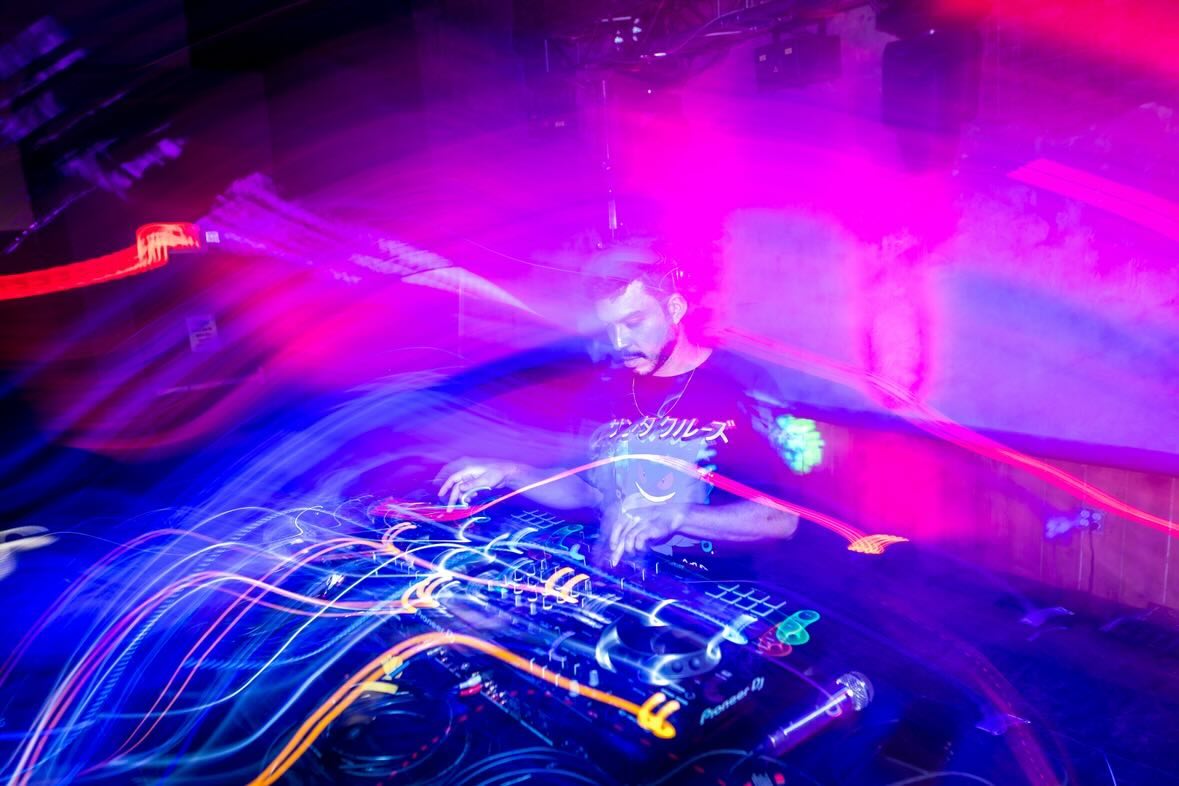
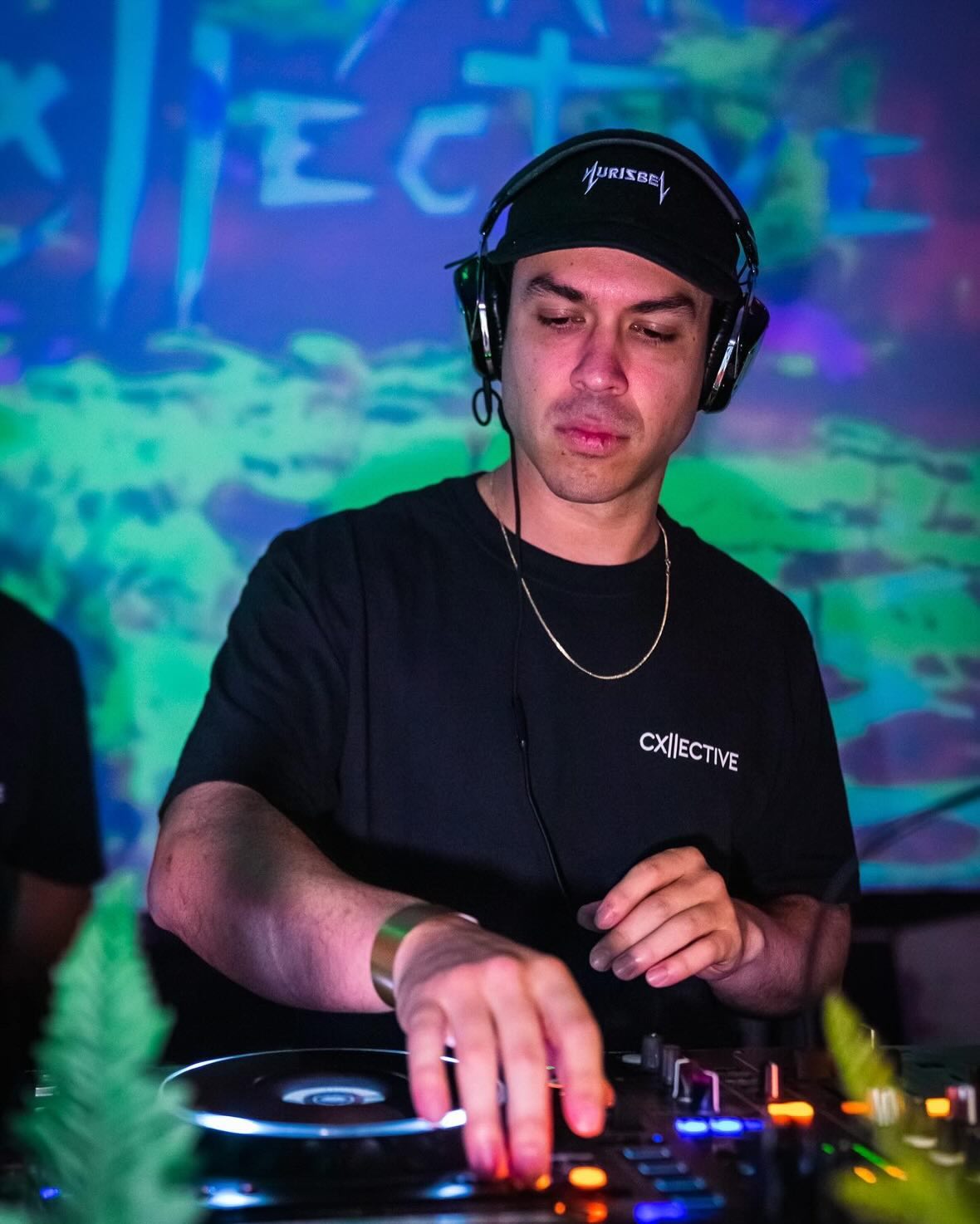
Julian Maya: My name is Julian Maya. I am the current event manager for The Nest at St. Pete Brewing. I also go by mayancxllective – that's my performing name when I DJ around town and in various cities in Florida. And I am also co-owner and operator of 1800cxllect.
Amanda Zantal-Wiener: Can you count on one hand how many different titles you have?
JM: Uh … too many. You want me to count for real? All right, let's see. I bartend. I manage. I run my own event company. I am the middleman for many other event companies. I just started doing private events with one of my buddies. I do screen printing sometimes. I still design a lot. I didn't even include "musician," so yeah, there you go.
AZW: So you do this in St. Pete. I want to hear your perspective on how this city has an almost unexpectedly active, robust music community. Do you think that a lot of people in the community here, like you, wear so many different hats and have all those different titles?
JM: Not many are as involved as I am currently, I would say. I do this full-time, and the only reason I do it full-time is that it's a lot of parts that add up to one thing for me currently.
I'm in a very unique position right now. The reason I'm here is because of music. When I first moved here, I was pretty new to electronic music, but then I ended up being buddies with L8 Night Flights [a St. Pete DJ collective], and that's kind of how I got into house and techno specifically. At the time, it was pretty underground, and I kind of just got addicted to it. Fast forward six years, and the landscape has definitely changed a lot. I feel like it's gotten more popular, but in interesting directions, especially in St. Pete. It's a very specific pocket of music you don't really find anywhere else.
AZW: What makes St. Pete so special?
JM: There's so much music in such a small area. Now that I've been doing this professionally for a while, and because I run a music venue, I'm more involved in the punk community, the metal community, and the alternative rock community. You also have psychedelic rock, you have rap, you have hip hop. There are so many musical pockets in this city that I didn't really know about until I started [doing what I'm doing now]. It's very interesting seeing how small St. Pete is land-wise, but how big the music community is here.
AZW: You said when you first got here, the EDM scene was so underground, and now, in this relatively small area of square footage, the music scene in general – not just EDM – has proliferated in a very short period of time. What do you think it is about this city that has allowed it to grow?
JM: A big part of it would be the number of people who moved here during COVID. St. Pete never really "closed," and I think that's one of the biggest factors. There was a small number of promoters, and a lot of people thought there was a gatekeeping thing where, you know, they weren't included in throwing shows. So now, because there are more people, they want to put on their own shows [and] there are a lot more promotional groups across every musical genre. Like, I get hit up all the time by new names that I've never seen before.
Especially in the political climate that we're in, music is kind of just a new escape and a way to have a voice. That's not new, but I think it's just been exacerbated by the current political climate and the number of people who have moved here so quickly. This was known as "God's waiting room," and it wasn't a party town at all. But just the sheer volume of people who have come here has kind of made everything grow.
AZW: There's a joke that "we don't live in Florida, we live in St. Pete." So, thinking about the political climate, the fact that we are within the borders of the state of Florida, but in our little oasis, what role do you think that plays, at least in what you've done here and the work you've been able to do here?
JM: I think a lot of creative people have sought change and have moved here. It's a good thing that newcomers come; whether you're an artist, musician, or promoter, I think it's necessary to grow regardless of what people think. There's room for everybody. Whether it's art, business, music, whatever, it requires collaboration. Collaboration is kind of where the magic happens, in my opinion.
"Whether you're an artist, musician, or promoter, I think it's necessary to grow regardless of what people think. There's room for everybody. Whether it's art, business, music, whatever, it requires collaboration. Collaboration is kind of where the magic happens, in my opinion."
This has been a pretty collaborative city, in my eyes, where I've dealt with people from all walks of life, whether new or long-time residents. And as soon as they decide to work with each other, you see cool things happen. That's been interesting, especially because St. Pete is so new in terms of growth. There's still time to like establish yourself here versus when you go to like bigger cities like Miami or New York, where you have the big players already who've existed, and it's a lot harder to like break into markets, per se, you know?
So here there's a little bit more of a window here. We still have a little bit of room to grow, in my opinion, before things start actually getting big footholds. We don't have any big corporations in here yet; we'll see.
AZW: Is that a good thing, or …?
JM: Like, I think everything in St. Pete is run by small groups of people, which I think is better, in a sense, because you have a little more variety and a little more control over keeping everything unique. Because as soon as you open up to bigger corporations, everything kind of just loses the uniqueness, I guess. Everything turns into the same.
In St. Pete, you don't really see many chain businesses. Like, there's not a lot of chain restaurants, which I like. It kind of gives us a stronger sense of identity. We're a mom-and-pop, neighborhood-run city, which goes into art, music, and businesses. I think that's a good thing. It makes it feel more homey versus, like, going to New York, and what do you see?
AZW: You see the Applebee's in Times Square.
JM: Yeah, we don't have a Times Square here.
AZW: You were talking about how so many people started their own collectives because they feel there's a higher barrier to entry to get into the ones that already exist. But at the same time, you also said collaboration is necessary.
JM: Yeah, it's necessary, honestly, if you want to last.
AZW: So how do you reconcile that, when a lot of people feel like there's a higher barrier to entry, they start their own collective or community, yet you see the communities coexisting so much?
JM: This is a difficult question to answer… I'm a little biased because I've seen both sides. I think what happens is when people create new groups out of – I don't want to say spite, spite is the incorrect word. Collaboration is key, but so is making your own identity. And I feel like there are few people who fall into this weird middle ground where they either choose not to collaborate or are shy. And because of that, they make their own group and then just do their own thing.
On the flip side, a lot of people will collaborate first, see how everything works, and then kind of make their own thing with the intent of already working with other people. And that's where I currently see a bit of a divide in music in general. We have a group of people who have already established themselves and have been working with others. And then we have a new group that comes from all the people moving here. It's like, a group of people that have moved here, choose not to collaborate at all, or go see what the actual scene is like, and then immediately make their own group and then try and just, you know, promote themselves and throw shows. And you have mixed, mixed experiences.
And then it just kind of makes this weird, muddy middle ground. It kind of turns into a little clique, which I feel like is normal in every type of scene. But since I see it every day, I run events every weekend, I see the divide – you know, those little lines in the sand of where people like, "no, I'm not going to work with that person." And it's like, well, I've never seen you work with anybody. So what are you talking about?
AZW: I didn't realize there were those rivalries.
JM: It's very cliquey. It's just kind of human psychology, where people take the choices of others [personally], as if they choose not to work with them, and they view it as, "Oh, well, they don't like me." And then they immediately write them off and just kind of do their own thing.
And there's never this, like, conversation about, "Hey, maybe they just didn't have the time, or they were already busy and didn't work with me for these reasons." But I feel like humans naturally just pick and choose sides. That definitely gets exacerbated in music. You see it in bands. Some bands hate each other. Some DJ groups don't like each other.
AZW: Do you think that, in this context, healthy competition is a good thing? Or is it not even healthy competition? Do you think it would be better if maybe it wasn't as cliquey?
Julian Maya: Oh, I think it would definitely be better if it were less cliquey. Absolutely. However, I guess it depends on what, as a promoter or as an artist, are you in it for? Because like, honestly, in the long run, if you do things out of love for what you're doing, I think you have a better chance of outlasting people who come in short term and just try to be competitive for no reason.
I feel like a lot of music communities can do better by just working together. It doesn't help that there aren't many venues here specifically for music. I feel like that's definitely a big part. You see a lot of people just renting random places, just because there's no other available space. And I get that that definitely feeds into the scarcity mindset, but I think a little more collaborative effort from people would go a very long way. Currently, the only people I see being collaborative are the ones who have been doing it for a while. It's a lot of new players who choose to be like, "Oh, we're the next best thing," but put no effort into nurturing the community that's already there.
AZW: And you said sometimes it works out. Sometimes it doesn't.
JM: Yeah. Like, it's a time-and-place thing. Let's say you throw a show or a party; you might hit a weekend when there's nothing else going on, and you just get really lucky that everyone's available.
But I still think collaboration is kind of key. That's kind of where the money is, I think, and the experience. You want a good experience, collaborate. On the scale of doing it for the love of the art to doing it out of necessity, where do you fall in the middle?
I make a living off of this. So my mindset is a little more, I would say, jaded. I'm just more focused on making sure my business does well. [For instance], because I work for St. Pete Brewing, my main goal is number one: bartenders need to be taken care of. If the bartenders aren't making money, that means the business isn't making money. And if the business isn't making money, why are we doing this?
And on the flip side, I mean, I used to be a starving artist. I'm still an artist every day. And I get the starving artist mentality. But yeah, I think making music from that mentality is probably a poor decision. Get a job that can sustain your starving artist persona. I'm in the middle. I work here full-time. I don't just do the music here. I still bartend. But I'm also involved in other stuff that sustains my life – I do a lot of private DJing stuff. I started doing weddings this past year. I didn't really want to do it, but honestly, I could cry myself to sleep with $100 bills. It makes you think differently. And you get to play music that you haven't really heard for a while, especially when you're just around electronic music all the time. It's kind of nice to hear like a cool little Akon throwback or like, you know, some Kendrick. Bad Bunny. I hate it when I get Bad Bunny requests when I'm at the club DJing. But I love getting Bad Bunny requests at weddings.
AZW: It's so interesting that you brought up the "I'll dry my tears with these $100 bills" thing. There's a growing conversation about whether it's possible to earn a living wage as an artist. Because art funding is drying up everywhere. Do you think that this is a place where you can, you know, be above the poverty line as an artist?
JM: It's not an easy lifestyle. And you definitely cannot have a lax personality. You have to hustle. There's no way that you will survive and be above the poverty level if you do not hustle every single day. So, on my end, I want to play music regardless of whether I make money. It's something that's just ingrained in me – I do it at home, I do it for fun, I do it for work. To make it a living, it's possible. Is it easy? Hell no. It's not easy at all.
My mindset is, if you want to do it, you're going to do it regardless. The money should be secondary. You should not be creating out of necessity. You should be creating out of a place of comfort. That's kind of where the best art comes from, in my opinion. So, regardless of what you need to do to make that happen, you should make that happen, [even if] that means working a shitty job at Starbucks. Who cares where your money comes from? You're still going to do what you want to do, regardless of what it is.
AZW: So … I have to play devil's advocate. Because a lot of people would argue that it really does matter where your money comes from. There's the theory that it's designed that way so that artists cannot make a living wage purely off their love of the art, because it keeps people in the system of working for Starbucks and other corporations. Do you see a future where we can work our way out of that?
JM: I guess I could elaborate further on my answer, where, sure, it's difficult to make a living off of what you love doing. It is super difficult to do that. However, it's still possible. And I feel like, at least for myself, I just had to change the idea of what I needed to do to make a living off of what I like doing, if that makes sense.
Let's say you're a painter, and your sole purpose is just to make money from selling paintings. You can still paint and make money by doing something else. Let's say you just get some kind of commissioning deal to paint stuff that may not be your style, but the money is still there. Essentially, there are different routes to make a sustainable living doing the same thing that you want to do. It just might not be as linear as you think. It's almost like a who-you-know type of deal. You never really know what's out there until you actually involve yourself in it, and then you can navigate through all the options that are there.
AZW: I want to make sure we touch on the tech of it all. What about the platforms that help people get their music out there? Because this is such a tricky topic. On the one hand, you could argue that these are platforms that have democratized music in a way that, as little as 15, 20 years ago, we didn't have. But at the same time, in many ways, it's making it even harder for artists to earn a living. They're getting even less compensated in some ways for their work. What's your outlook?
JM: Kind of. This is actually something that I've learned to accept: most big musicians you see in this day and age don't make money from streaming services or even from selling music that much. Unless you're huge, you're selling millions of copies of CDs or whatever. Most of the music nowadays is done through throwing shows. That's why you have these huge headline tours for big artists. For myself specifically, I was releasing music.
In the past couple of years, at least for 1800cxllect, we've been more selective about what we release and where. Currently, we only put our music on Bandcamp and Soundcloud. That's a theme I'm noticing among a lot of artists we follow. The uniqueness of their artistry now comes from the limited places where you can find their music.
I think we're going to see a bit of a renaissance of people going back to more analog-style performances and collections of music and stuff. I think the experience is going to [have to] be more memorable than just, "oh, let me just hear this one track," versus "I've never heard this song before in person. Where can I find this?" Good luck. You're never going to find it, because that's the whole point of being here. I think that's kind of where, at least, the underground scene is kind of going.
AZW: Tell me a little bit about your shows. What's the vibe? What's the energy?
JM: In St. Pete, 1800cxllect probably has one of the most unique vibes out of all of the DJ groups because we come from a group of dancers. Everyone who DJs for us, we still dance together. We're all shufflers. So we all met prior to learning how to DJ by going to festivals and shows all the time. Most of our following are either people who used to dance or still dance. So we have the most people who know how to actually dance at our shows. And it makes sense, because the type of music that we go after is very dance-forward. That's the best way I can describe our shows.
AZW: Are you familiar with The Pharcyde?
JM: I love The Pharcyde.
AZW: Pretty sure they met as dancers, too.
JM: Yeah. Hell yeah.
AZW: Yeah. And Booty Brown has a famous quote about how the way he raps is similar to the way he dances.
JM: That's the way I DJ, actually. In dancing, once you hit a certain point, you kind of let the music dictate when you have explosiveness and when you kind of just coast. A lot of it has to do with phrasing. As a DJ, you can immediately tell when someone doesn't know how to phrase. What I mean by that is, most music is made mathematically. Everything's on a four, eight, 16, 32 count, right? You can tell when someone hasn't mixed in at one of those points, cause the music just sounds off. Like, there's something that doesn't line up, and you can hear it.
Most people probably won't hear that. But if you dance, you'll hear it cause it'll throw you off. And as a DJ, you definitely notice. I DJ in that mindset. I use the music to kind of dictate when I cut something or when I put something on, or when I use an effect. It's kind of the same way I dance, where there's a crescendo at points or a low end that drops off. And that's when I choose to get out of a certain move or start something new.
It's always like, let the music dictate what you do. And it makes it more fluid, in a sense.
AZW: Anything else you want to add?
JM: Yeah. We talked about going back to analog. 1800cxllect transitioned to only vinyl recently, for a few reasons. The barrier to entry is much more difficult. Like I said, there are a lot of new people that have come into the scene, and this kind of thins the herd a little bit. The integrity of the style of music probably fits what I'm looking for because we're pretty picky and, again, we're very dance-forward. We're dancers. We can hear bullshit music from a mile away. If you don't have dancers at your shows, you're kind of doing something wrong.
There's a difference between party people, between music heads, and we like the line in the middle. We want a good mix of both people who want to party and people who really like dance-forward music. And a lot of the stuff that we've been listening to lately is getting pressed on vinyl.
AZW: Now I'm going to open a can of worms. So, hip-hop is often cited as having started in the Bronx at a house party. It was set up with spinning and mixing vinyl. And the other thing is, a lot of dance parties, a lot of what today we'd call raves, started as safe spaces for queer and Black people to dance. Do you think most people who go to the shows understand the historical significance of where they are?
JM: No, there aren't many right now. There's so much going on that a lot of people just like EDM. And I use that term loosely because I never call the music that we play EDM. But EDM as a whole is so much bigger now than it was 20 years ago that a lot of people just view it as a fun party, which it is. It should be a fun party.
But a lot of the roots are definitely not there anymore, and you can tell in a lot of these crowds where, like, no one's really dancing. Everyone's kind of just standing there and looking around for like hot girls or like, you know, people just like holding their cup and like not really dancing and stuff. It's almost just like a front to be like, "Hey, I'm here to show that I'm cool and at this party." And that's kind of why I think our shows are so unique, because our parties are not like that. No one really talks. Everyone just dances all the time.
I think it'll come back full circle. I don't really care if our shows have one dancer or 100 dancers. If I have one dancer, I'm satisfied because that means I did better than a lot of the other parties where no one's dancing. And I think the longer we do this, the more people who are actually interested in deep-diving into the history and the reasons why certain music styles exist will find us.